
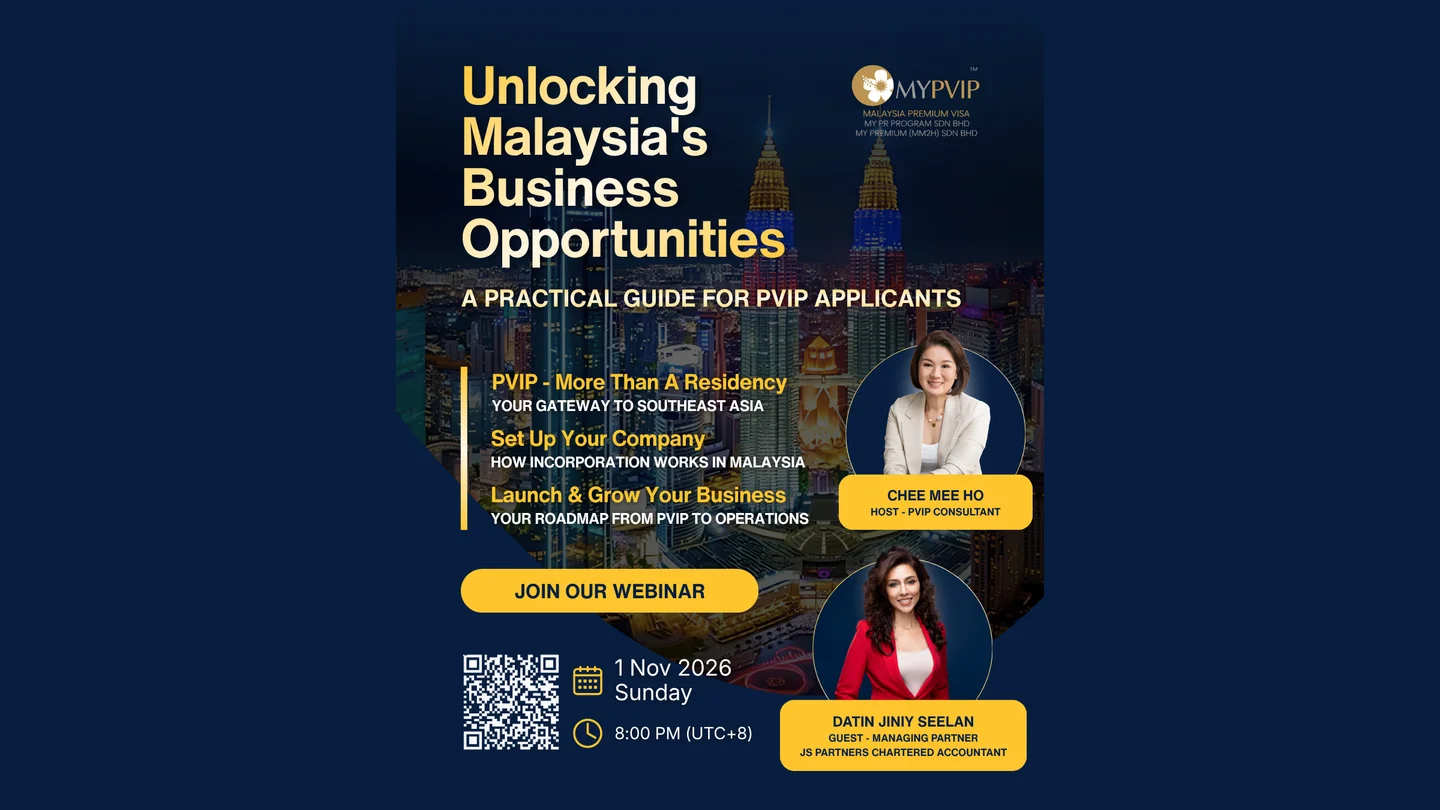
Watch the replay: MYPVIP's webinar on running a business in Malaysia
Missed the 1 November session? The full recording is here. It covers how PVIP lets you live in Malaysia and run your own company, which structure to choose, and the set-up mistakes that cost foreign founders months.
The short version
- The full recording of "From PVIP Visa to Business Owner: Unlocking Malaysia's Business Opportunities", held on Zoom on Sunday 1 November 2026.
- PVIP holders can live in Malaysia, own a company and act as its resident director, with no nominee director and no separate work permit.
- A Sdn Bhd can be fully foreign-owned in most sectors and registered online in three to seven working days.
- Choosing the wrong SSM business activity codes can get your premises licence refused and cost more than three months to fix.
- Employment Pass salary thresholds roughly doubled from 1 June 2026. PVIP founders are not subject to them.
The recording is up
MYPVIP's free webinar on running a business in Malaysia took place on Sunday 1 November, and the full recording is now available above. If you couldn't make it live, or want to go back over the details, you can watch it at your own pace.
PVIP consultant Chee Mee Ho hosted the session, with guest speaker Datin Jiniy Seelan, managing partner of JS Partners Chartered Accountant.
What it covers
The session starts with why Malaysia works as a base for doing business across Southeast Asia, then explains what PVIP lets you do. The pass gives up to 20 years of residency, has no minimum stay, and lets you work and run your own company.
It then turns to the company itself: why most founders choose a Sdn Bhd over a branch or representative office, which sectors allow 100% foreign ownership, and how incorporation runs through SSM. Datin Jiniy Seelan shares a case where a founder's business activity codes didn't match the actual business, and fixing it took more than three months.
The last part covers what comes after incorporation, including tax registration, the corporate bank account, hiring, and why the tighter Employment Pass rules from June 2026 don't apply to PVIP founders.
Read the full guide
We've written the session up as a full guide, with the fee figures, the company structure comparison and the Employment Pass tables. Read it here: From PVIP visa to business owner.
Disclosure: Jason Yap, who writes this site, is managing director of MYPVIP, which hosted this webinar.
“From PVIP Visa to Business Owner: Unlocking Malaysia's Business Opportunities”
What it means
What this changes for an applicant
- If you plan to run a company in Malaysia, the order matters: secure PVIP first, then incorporate, so you can be your own director from day one.
- Our full written guide walks through every stage, with the figures from the session.
Source
This article was written by Malaysia Visa Guide, based on reporting by MYPVIP webinar recording (YouTube). We summarise and explain the news in our own words; we do not reproduce it. Read the original report for the publisher's full account.

News is a starting point, not advice.
For what this means in your own case, the verified figures live in the PVIP guide, or run the eligibility checker.